🌳 Ep. 223: Pokémon – Top 5 Most Popular Memory Mnemonic
👋 Intro
Hello and welcome to this episode of the podcast, "The Mnemonic Memory", where we add a single mnemonic leaf to our Tree of Knowledge.
I’m Jans, your Mnemonic Man, and today's episode will be on something I knew absolutely nothing about before I started researching this episode and that is about the highest-grossing media franchise in the world, Pokémon.
Just a note before I get started and that is that Pokémon celebrates its 30th anniversary on February 27, which is known as Pokémon Day since the original release of Pokémon Red and Green in Japan in 1996.
Pokémon is a Japanese media franchise created by Satoshi Tajiri who was assisted with key character designs and illustrations by Ken Sugimori. It was first launched in 1996 with the original Pokémon Red and Green games for the Nintendo Game Boy.
The name is short for “Pocket Monsters,” and its core concept is a world where humans capture, train, and battle creatures with unique abilities.
Players take on the role of Pokémon Trainers who travel across regions, catch different species, and compete to become a Pokémon Champion by defeating powerful Gym Leaders and other trainers.
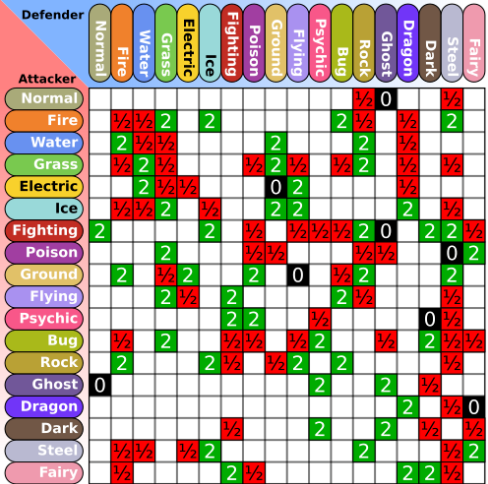
Each Pokémon belongs to one or two elemental “types,” of which there are officially 18. These include Normal, Fire, Water, Electric, Grass, Ice, Fighting, Poison, Ground, Flying, Psychic, Bug, Rock, Ghost, Dragon, Dark, Steel, and Fairy.
Beyond video games, Pokémon has grown to be the highest-grossing media franchise in the world. It includes a long-running animated TV series, trading card games, movies, toys, books, and mobile apps like Pokémon GO.
The Pokémon fan community is huge, and they have also joined in the fun and created “Fakemon,” which are fan-designed Pokémon.
Today’s mnemonic will be on the top five most popular Pokémon.
So, with that being said, we will begin with a summary from Wikipedia.
📖 Wikipedia Summary
Pokémon[a][b] is a Japanese media franchise consisting of video games, animated series and films, a trading card game, and other related media. The franchise takes place in a shared universe in which humans co-exist with creatures known as Pokémon, a large variety of species endowed with special powers.
The franchise's primary target audience is children aged 5 to 12,[2] but it is known to attract people of all ages.[I] Pokémon is estimated to be the world's highest-grossing media franchise and is one of the best-selling video game franchises.
The franchise originated as a pair of role-playing games developed by Game Freak, from an original concept by its founder, Satoshi Tajiri. Released on the Game Boy on 27 February 1996, the games became sleeper hits and were followed by manga series, a trading card game, and anime series and films.
From 1998 to 2000, Pokémon was exported to the rest of the world, creating an unprecedented global phenomenon dubbed "Pokémania". By 2002, the craze had ended, after which Pokémon became a fixture in popular culture, with new products releasing to this day. In the summer of 2016, the franchise spawned a second craze with the release of Pokémon Go, an augmented reality game developed by Niantic.
Unlike most IPs, which are owned by one company,[12] Pokémon is jointly owned by three: Nintendo, Game Freak, and Creatures.[1] Game Freak develops the core series RPGs, which are published by Nintendo exclusively for their consoles, while Creatures manages the trading card game and related merchandise, occasionally developing spin-off titles.
The three companies established The Pokémon Company (TPC) in 1998 to manage the Pokémon property within Asia. The Pokémon anime series and films are co-owned by Shogakukan. Since 2009, The Pokémon Company International (TPCi), a subsidiary of TPC, has managed the franchise in all regions outside Asia.[13][14]
Extracted from: [https://en.wikipedia.org/wiki/Pok%C3%A9mon]
🧠 Memory Mnemonic
Pokémon – Top 5 Most Popular Memory Mnemonic – BeCoMe Pikachu or Eevee
(Picture yourself morphing into your favourite Pokémon, Pikachu or Eevee.)
1. Bulbasaur
2. Charizard
3. Mewtwo
4. Pikachu
5. Eevee
NB: According to Makeshift Project (not in order)
🔎 Five Fun Facts
1. The name “Pokémon” comes from Pocket Monsters. It’s a combination of the English word pocket and the Japanese monsters, reflecting the original idea of tiny creatures you could carry and collect. The name was designed to appeal to kids, but has also had a massive appeal to adults. There are now over 1,000 unique Pokémon species with distinct abilities and traits.
2. Though it is number 112 in the Pokédex, Rhydon was the first Pokémon ever created, according to Ken Sugimori, the primary designer for the Pokémon games. It was primarily used as a base model because of its simple shape. Rhydon appears often in classic game art and even as statues in the original Pokémon Red and Blue.
3. How did Pikachu come to be the franchise’s enduring mascot? This is a real rags-to-riches story as in some of the original games, Pikachu was rare, and most people didn’t even know it existed. Apparently, it became popular because OLM Inc found out that Pikachu was popular with both girls and boys, unlike Clefairy, who was destined for the throne and was pink in colour. So, Pikachu won the day due to its pet-like cuteness, its identifiable yellow colour, and broad appeal.
4. There’s more to a Pokémon name than meets the eye. Many names hide clever meanings, are composed of compound words, blend descriptions of their appearance and behaviour, contain different languages, and so on. Some examples include birds like Articuno, Zapdos, and Moltres that respectively include the Spanish numbers uno, dos, tres in their names, Mimikyu, which is what this Pokémon does, and the reverse spelling of Ekans and Arbok, which is respectively snake and cobra.
5. The infiltration of Pokémon into world culture has truly been breathtaking. For example, the tiny island nation of Niue has printed legal currency featuring Pikachu and other Pokémon, which doubles as both money and as a collectable. Pokémon Go has caused traffic jams of pedestrians and actually made people walk, Pokémon trading cards were a staple of school playgrounds, and catchphrases like “Gotta catch ‘em all!” and “I choose you” are recognised worldwide.


🎓 Three-Question Quiz
Q.1. What does the word “Pokémon” stand for?
Q.2. What year was Pokémon first released?
Q.3. What type is Pikachu?
Bonus Q. Who is the creator of the Pokémon franchise?
Bonus Q. Why can’t you blindfold a Pokémon?
🧠 Memory Mnemonic Recap
Pokémon – Top 5 Most Popular Memory Mnemonic – BeCoMe Pikachu or Eevee
(Picture yourself morphing into your favourite Pokémon, Pikachu or Eevee.)
1. Bulbasaur
2. Charizard
3. Mewtwo
4. Pikachu
5. Eevee
🎓 Three-Question Quiz Answers
Q.1. What does the word “Pokémon” stand for?
A. Pocket Monsters
Q.2. What year was Pokémon first released?
A. 1996, with Pokémon Red and Green in Japan
Q.3. What type is Pikachu?
A. Electric type
Bonus Q. Who is the creator of the Pokémon franchise?
Bonus Q. Why can’t you blindfold a Pokémon?
A. Because it’s always going to Pikachu!
🔤 Word of the Week
supervene
[soo-per-veen]/ ˌsu pərˈvin /
supervened, supervening
to take place or occur as something additional or extraneous.
Example
In competitive battles, new strategies often supervene on small rule changes, completely reshaping which Pokémon dominate the meta.
Extracted from: [https://www.dictionary.com/]
💡 Memory Tip
For our memory tip today, we will be talking about the Keyword Method mnemonic.
The keyword method mnemonic is a strategy used to remember unfamiliar words, names, or terms by linking them to familiar words that sound similar to the new word.
You would then form a vivid mental image, story, or sentence connecting the keyword with the actual definition. By creating a visual and sound bridge this strengthens recall along with speed. This method is highly effective for foreign language and complex words or terms.
An example could be to remember the Spanish word for duck which is pato. The keyword could be pot, and you could visualise a duck swimming around in your cooking pot on your oven. See you next week.
👉 Free Memory Mnemonics at:
https://www.themnemonictreepodcast.com
🎧 Listen on Apple Podcasts:
https://podcasts.apple.com/au/podcast/the-mnemonic-tree-podcast/id1591795132
🎧 Listen on Spotify:
https://open.spotify.com/show/3T0LdIJ9PBQMXM3cdKd42Q?si=fqmaN2TNS8qqc7jOEVa-Cw
🔗 References