🌳 Ep. 227: The Provinces & Territories of Canada Memory Mnemonic
👋 Intro
Hello and welcome to this episode of the podcast, "The Mnemonic Memory", where we add a single mnemonic leaf to our Tree of Knowledge.
I’m Jans, your Mnemonic Man, and today's episode will be on the second biggest country in the world, Canada, and more in particular, the provinces and territories that make up this great country.
Canada is divided into ten provinces and three territories. The 10 provinces are: Ontario, Quebec, British Columbia, Alberta, Manitoba, Saskatchewan, Nova Scotia, New Brunswick, Prince Edward Island, and Newfoundland and Labrador. Ontario is the most populous province in Canada, with a population exceeding 14 million, while Quebec is the largest at approximately 1.54 million km2.
The three northern territories are Yukon, the Northwest Territories, and Nunavut. The most populous territory is the Yukon with a population of around 47,000, while the biggest territory is Nunavut at approximately 2 million km2.
The provinces have constitutional powers under the Canadian federation, while the territories operate with powers delegated by the federal government. These territories cover immense areas of Arctic and sub-Arctic land and have relatively small populations due to the extreme environment. The newest territory is Nunavut, which was created in 1999 to provide greater self-governance for the Inuit people.
Canada is a vast country that stretches from the Atlantic Ocean to the Pacific Ocean, and northward into the Arctic. It has the longest coastline, the most lakes, and some of the most mind-blowing landscapes on planet earth.
Today’s mnemonic will be on the provinces and territories of Canada.
So, with that being said, we will begin with a summary from Wikipedia.
📖 Wikipedia Summary
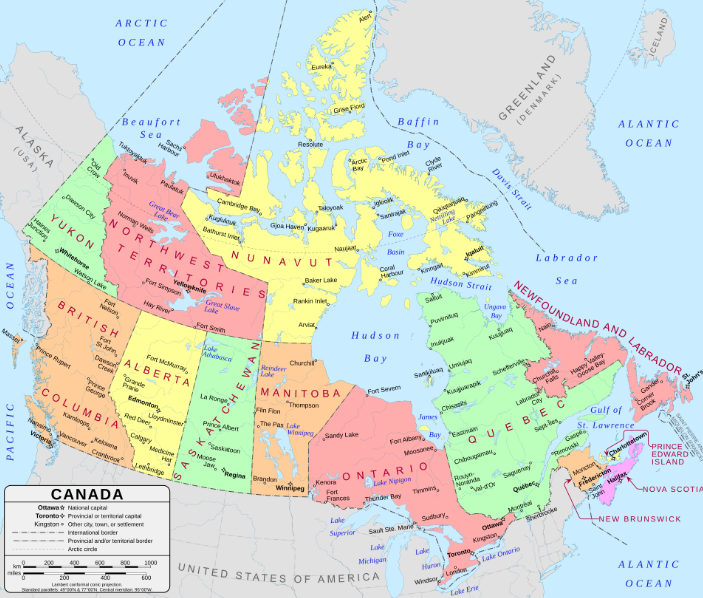
Canada has ten provinces and three territories that are sub-national administrative divisions under the jurisdiction of the Canadian Constitution. In the 1867 Canadian Confederation, three provinces of British North America—New Brunswick, Nova Scotia, and the Province of Canada (which, upon Confederation, was divided into Ontario and Quebec)—united to form a federation, becoming a fully independent country over the next century.
Over its history, Canada's international borders have changed several times as it has added territories and provinces, making it the world's second-largest country by area.
The major difference between a Canadian province and a territory is that provinces receive their power and authority from the Constitution Act, 1867 (formerly[1] called the British North America Act, 1867). Territories are federal territories whose territorial governments have powers delegated to them by the Parliament of Canada.
Powers are divided between the Government of Canada (the federal government) and the provincial governments by the Constitution Act, either exclusively or concurrently. A change to the division of powers between the federal government and the provinces requires a constitutional amendment. A similar change affecting the territories can be performed unilaterally by the government or the Parliament of Canada.
In modern Canadian constitutional theory, the provinces are considered to be co-sovereign, based on the division of responsibility between the provincial and federal governments within the Constitution Act, 1867; each province thus has its own representative, the lieutenant governor, of the Canadian Crown.
The territories are not sovereign but have their authorities and responsibilities devolved from the federal level; as a result, each has a commissioner who represents the federal government.
Extracted from: [https://en.wikipedia.org/wiki/Provinces_and_territories_of_Canada]
🧠 Memory Mnemonic
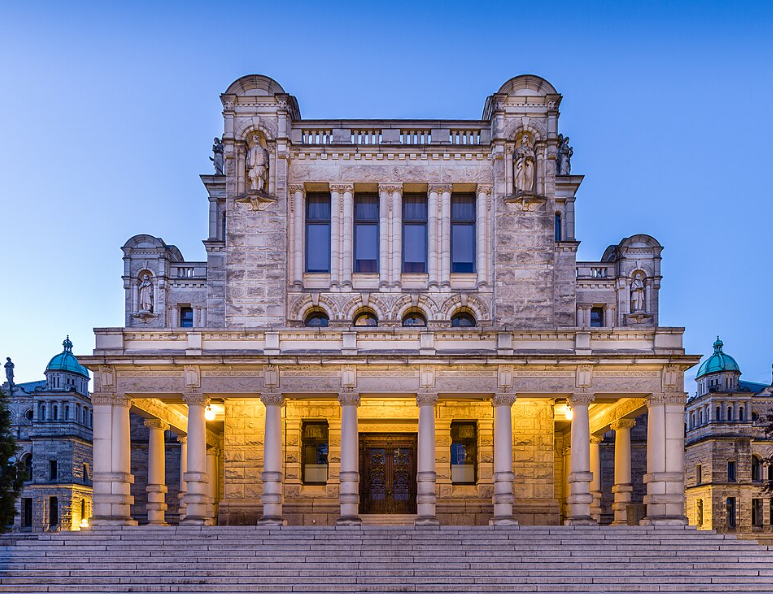
Provinces & Territories of Canada Memory Mnemonic – YaNN and BAS went to the MOQNNN with Prince Edward
(Picture Yann from the Yukon and Bas from British Columbia going to the moon with Prince Edward, Duke of Edinburgh.)
1. Yukon
2. Northwest Territories
3. Nunavut
4. British Columbia
5. Alberta
6. Saskatchewan
7. Manitoba
8. Ontario
9. Quebec
10. Newfoundland and Labrador
11. New Brunswick
12. Nova Scotia
13. Prince Edward Island
(Goes left to right from top to bottom of Canada)
🔎 Five Fun Facts
1. Canada has the longest coastline in the world, with a length of 202,080 km or 125,567 miles. This coastline includes both the mainland and over 36,000 islands, bordering the Atlantic, Pacific, and Arctic oceans.
2. More than half the lakes in the world are located in Canada. Canada is estimated to have over 2 million lakes, which cover nearly 9% of the country’s total area, and represent about 60% of the world’s freshwater lakes.
3. Canada is home to around 60% of the world’s polar bear population. Churchill, Manitoba, in northern Canada, is known as the polar bear capital of the world. Wild polar bears migrate through the town in the autumn, attracting thousands of tourists worldwide.
4. Canada is the second largest country in the world behind Russia, with China the third largest. Its total area is approximately 9.98 million square kilometres, of which approximately half is permafrost, forests make up around 36%, while agricultural land only makes up a small portion, estimated to be around 6.3% to 6.47%.
5. The official languages of Canada are English and French. Both English and French are guaranteed equality of status in federal institutions. According to demographics in 2021, English was the first official language of 76.1% of the population, while French was the first official language for 22%.
Now, all this talk of Canada reminds me when I was out and about on holiday, trekking the Everest trail in Nepal back in 2001. And in our group, we had an American and a Canadian. Anyway, during the trek, the American was busy expounding how much better the USA was compared to Canada, but the Canadian was having Nunavut and retorted his argument and went on to eloquently conclude that the only way the USA was better than Canada was that it had better neighbours!


🎓 Three-Question Quiz
Q.1. What is the largest city in Canada?
Q.2. What is Canada’s biggest bay?
Q.3. What is Canada’s highest mountain?
Bonus Q. What is the largest province in Canada by land area?
🧠 Memory Mnemonic Recap
Provinces & Territories of Canada Memory Mnemonic – YaNN and BAS went to the MOQNNN with Prince Edward
(Picture Yann from the Yukon and Bas from British Columbia going to the moon with Prince Edward, Duke of Edinburgh.)
1. Yukon
2. Northwest Territories
3. Nunavut
4. British Columbia
5. Alberta
6. Saskatchewan
7. Manitoba
8. Ontario
9. Quebec
10. Newfoundland and Labrador
11. New Brunswick
12. Nova Scotia
13. Prince Edward Island
(Goes left to right from top to bottom of Canada)
🎓 Three-Question Quiz Answers
Q.1. What is the largest city in Canada?
A. Toronto, with over 6 million people in its metropolitan area
Q.2. What is Canada’s biggest bay?
A. Hudson Bay, which is also the second largest in the world
Q.3. What is Canada’s highest mountain?
A. Mount Logan 5,959 m / 19,551 feet, which is located in the Yukon
Bonus Q. What is the largest province in Canada by land area?
A. Quebec
🔤 Word of the Week
Fantabulous
[fan-tab-yuh-luhs]
ADJECTIVE
Slang.
1. extremely fine or desirable; excellent; wonderful.
Example
Canada’s vast wilderness and friendly culture make it a fantabulous destination for travellers.
Extracted from: [https://www.dictionary.com/]
💡 Memory Tip
For our memory tip today, we will be talking about Spelling Mnemonics, which are phrases to help you spell tricky words.
Spelling mnemonics are phrases, patterns, or associations used to help people to remember how to spell difficult words. They generally turn the letters of the word into a short sentence or rhyme.
A simple example could be spelling BECAUSE, which could be Big Elephants Can Always Understand Small Elephants. See you next week.
👉 Free Memory Mnemonics at:
🎧 Listen on Apple Podcasts:
https://podcasts.apple.com/au/podcast/the-mnemonic-memory-podcast/id1591795132
🎧 Listen on Spotify:
https://open.spotify.com/show/3T0LdIJ9PBQMXM3cdKd42Q
🔗 References
https://chatgpt.com/c/69d38790-9a20-8321-af79-af0d9e38d821
https://en.wikipedia.org/wiki/Provinces_and_territories_of_Canada
https://www.kids-world-travel-guide.com/canada-facts.html
https://livelearn.ca/article/about-canada/10-amazing-facts-about-canadas-geography/