
🌳 Ep. 233: The Panama Canal – Top 7 Facts Memory Mnemonic
👋 Intro
Hello and welcome to this episode of the podcast, "The Mnemonic Memory", where we add a single mnemonic leaf to our Tree of Knowledge.
I’m Jans, your Mnemonic Man, and today's episode will be on a man-made engineering marvel, the Panama Canal, a canal that links the Pacific with the Atlantic.
The Spanish were the first to conceive and explore this idea around the 16th century under Spanish ruler King Charles V. He ordered the first official survey to map out the potential waterway. In the end, they abandoned the project due to the dense jungle, lack of advanced machinery, and the deadly tropical diseases. They decided to focus on overland routes in order to move their bounty of gold and silver.
The French then attempted to build it led by Ferdinand de Lesseps, the man who built the Suez Canal. This attempt was made in 1881 and was eventually abandoned in 1889. Ferdinand de Lesseps was intent on replicating his sea-level crossing vis-a-vis the Suez Canal; however, he grossly underestimated the mountainous terrain, the rainy season leading to mudslides and flooding, and the plethora of tropical diseases.
In 1904, the US then purchased the canal assets from the French for $40 million and began their attempt. They quickly realised that a sea-level canal was impossible and pivoted to the lock-type canal. They also invested heavily to combat disease such as yellow fever and malaria through sanitation and mosquito control.
The project spawned the largest man-made-lake in the world at the time. Gatun Lake, which was formed by the damming of the Chagres River, was to be used to supply the locks.
The project was eventually completed in 1914 and has dramatically reshaped global trade, turning a two-to-three-month journey into an eight-to-ten-hour trip.
Today’s mnemonic will be on the top seven facts about the Panama Canal.
So, with that being said, we will begin with a summary from Wikipedia.
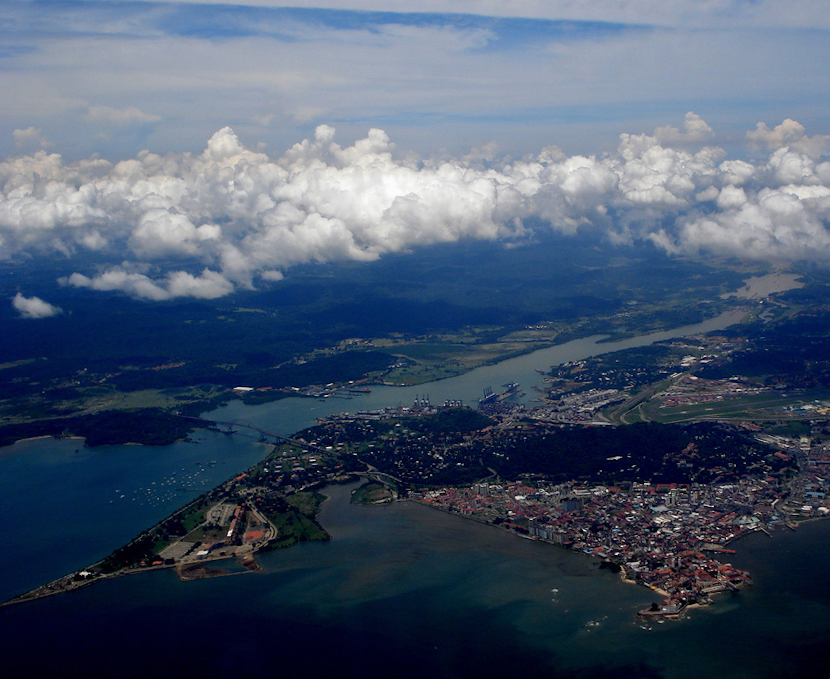
📖 Wikipedia Summary
The Panama Canal (Spanish: Canal de Panamá) is an artificial 82-kilometer (51-mile) waterway in Panama that connects the Caribbean Sea with the Pacific Ocean. It cuts across the narrowest point of the Isthmus of Panama and is a conduit for maritime trade between the Atlantic Ocean and the Pacific Ocean. Locks at each end lift ships up to Gatun Lake, an artificial freshwater lake 26 meters (85 ft) above sea level, created by damming the Chagres River and Lake Alajuela to reduce the amount of excavation work required for the canal.
Locks then lower the ships at the other end. The original locks are 33.5 meters (110 ft) wide and allow the passage of Panamax ships. A third, wider lane of locks was constructed between September 2007 and May 2016. The expanded waterway began commercial operation on 26 June 2016. The new locks allow for the transit of larger, Neopanamax ships. An average of 200,000,000 litres (52 million US gallons) of fresh water is used in a single passing of a ship. The canal is threatened by low water levels during droughts.[1][2]
The Panama Canal shortcut greatly reduces the time for ships to travel between the Atlantic and Pacific oceans, enabling them to avoid the lengthy, hazardous route around the southernmost tip of South America via the Drake Passage, the Strait of Magellan or the Beagle Channel. Its construction was one of the largest and most difficult engineering projects ever undertaken.
Since its inauguration on 15 August 1914, the canal has succeeded in shortening maritime communication in time and distance, invigorating maritime and economic transportation by providing a short and relatively inexpensive transit route between the two oceans, decisively influencing global trade patterns, boosting economic growth in developed and developing countries, as well as providing the basic impetus for economic expansion in many remote regions of the world.[3]
Extracted from: [https://en.wikipedia.org/wiki/Panama_Canal]
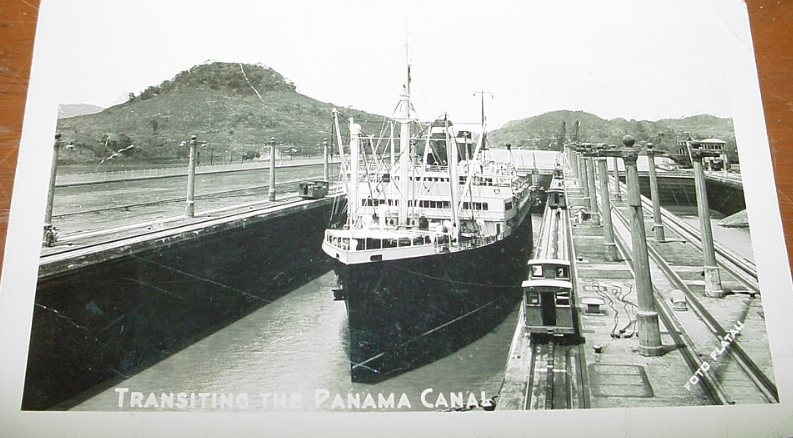
🧠 Memory Mnemonic
The Panama Canal – Top 7 Facts Memory Mnemonic – TELECOM
(Picture one of the world's most advanced telephone networks, which ran alongside the Panama Canal, allowing lock operators, engineers, train crews, and administrators to coordinate one of the greatest engineering projects in history.)
1. The Panama Canal opened in 1914
2. Engineers constructed the world’s largest artificial lake
3. Links the Atlantic and Pacific Oceans via an 82 km canal
4. Expanded in 2016 for bigger ships
5. Construction cost over 25,000 lives
6. One of the Man-Made Wonders of the World
7. Most expensive project in American history at the time
🔎 Five Fun Facts
1. The first attempt at a canal was made by the French. This was led by Ferdinand de Lesseps in 1881 following his successful completion of the Suez Canal in Egypt in 1869. This was a different beast, though, and efforts were plagued by engineering challenges, financial losses, tropical diseases, which included malaria and yellow fever, landslides, and high death tolls. The project was subsequently abandoned in 1889.
2. Before the Panama Canal was built, ships would travel around the southern tip of South America via Cape Horn. This voyage was treacherous and took up to two to three months. The canal shortened this voyage by more than 13,000 kilometres. This dramatically reduced travel time, fuel costs, and shipping expenses.
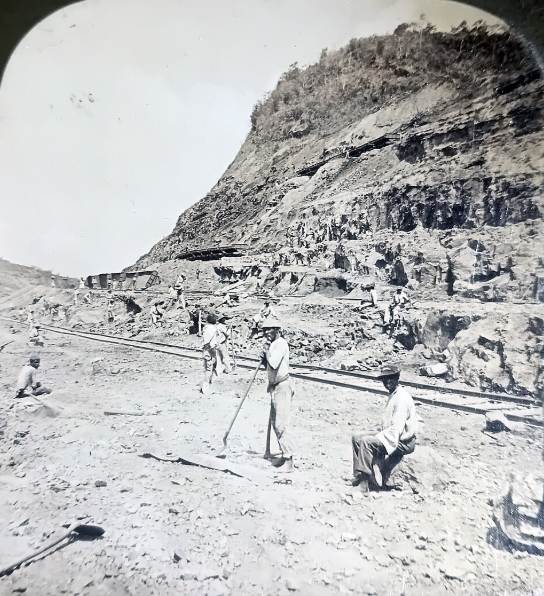
3. Construction of the canal officially began in 1904 under chief engineer John Findley Wallace. He resigned within a year after frustration with the country’s poor infrastructure, aging equipment, and tropical diseases. John Stevens then took over, who immediately halted excavation work to rebuild the railway to enable removal of the dirt and rock. His decision to scrap the plan for a sea-level canal and build a lock system with a dam and artificial lake was instrumental in the success of the project. He unexpectedly resigned in 1907, and Colonel George Washington Goethals took the project to its completion in 1914.
4. Unlike the Suez Canal, which is at sea level, the Panama Canal uses locks to raise the ships an astonishing 26 metres above sea level. The ship is guided by tugboats into the lock chamber in which the gate closes behind it. Enormous valves are then opened, which fill the chamber with water using only gravity from Gatun Lake. When the water level matches the upstream level, the gate then opens, and the ship is on its way. This process is repeated through three sets of locks.
5. Although the United States built and operated the canal for decades, resentment slowly seeped in among the Panamanian people towards the US territorial occupation. This eventually led to the signing of the Torrijos-Carter Treaties in 1977. This phased out US control and gave Panama complete control of the waterway by December 31, 1999.

.jpg)

🎓 Three-Question Quiz
Q.1. In what year did the Panama Canal officially open?
Q.2. Name two diseases that caused thousands of deaths during the canal’s construction?
Q.3. What engineering feature allows ships to be raised and lowered through
the Panama Canal?
Bonus Q. What direction does the Panama Canal run primarily? Options are East to West or Northwest to Southeast
Bonus Q. What is the name of the organisation that runs the Panama Canal? Hint: Initials are PCA
Bonus Q. Why is the Panama Canal the safest body of water at night?
🧠 Memory Mnemonic Recap
The Panama Canal – Top 7 Facts Memory Mnemonic – TELECOM
(Picture one of the world's most advanced telephone networks, which ran alongside the Panama Canal, allowing lock operators, engineers, train crews, and administrators to coordinate one of the greatest engineering projects in history.)
1. The Panama Canal opened in 1914
2. Engineers constructed the world’s largest artificial lake
3. Links the Atlantic and Pacific Oceans via an 82 km canal
4. Expanded in 2016 for bigger ships
5. Construction cost over 25,000 lives
6. One of the Man-Made Wonders of the World
7. Most expensive project in American history at the time
🎓 Three-Question Quiz Answers
Q.1. In what year did the Panama Canal officially open?
A. 1914 on 15 August
Q.2. Name two diseases that caused thousands of deaths during the canal’s construction?
A. Malaria and Yellow Fever
Q.3. What engineering feature allows ships to be raised and lowered through the Panama Canal?
A. A system of locks.
Bonus Q. What direction does the Panama Canal run primarily? Options are East to West or Northwest to Southeast
A. Northwest to Southeast
Bonus Q. What is the name of the organisation that runs the Panama Canal? Hint: Initials are PCA
A. Panama Canal Authority
Bonus Q. Why is the Panama Canal the safest body of water at night?
A. Because they lock it up!
🔤 Word of the Week
veracity
[vuh-ras-i-tee]
veracity
1. habitual observance of truth in speech or statement; truthfulness.
Example
The veracity of the Panama Canal's transformation of world shipping is beyond dispute.
Extracted from: [https://www.dictionary.com/]
💡 Memory Tip
For our memory tip today, we will be talking about nature’s miracle, the egg.
Eggs are among the most nutrient-dense foods available and provide several important benefits for brain health.
Some of these benefits include:
• They are an excellent source of choline, a nutrient the body uses to produce acetylcholine, a neurotransmitter essential for memory, learning, and muscle control.
• They contain high-quality protein, which supplies the amino acids needed to build and repair brain tissue.
• They are an excellent source of vitamins B6, B12, and folate that help support healthy brain function and reduce levels of homocysteine.
• The yolk contains lutein and zeaxanthin, which are antioxidants that may help protect the brain and eyes from age-related damage.
• And finally, eggs also provide vitamin D, selenium, and healthy fats that support overall health, immune function, and cell maintenance.
I love my eggs and have three of these little miracles each day for breakfast on sourdough toast, with real butter, avocado, and a tasty cheese. See you next week.
👉 Free Memory Mnemonics at:
🎧 Listen on Apple Podcasts:
https://podcasts.apple.com/au/podcast/the-mnemonic-memory-podcast/id1591795132
🎧 Listen on Spotify:
https://open.spotify.com/show/3T0LdIJ9PBQMXM3cdKd42Q
🔗 References
https://www.avantiworldtravel.com/blog/8-facts-about-the-panama-canal
https://www.mentalfloss.com/geography/15-connective-facts-about-panama-canal
https://chatgpt.com/c/6a43375b-b920-83ec-a68e-c3695cc6d43b
https://somethinginherramblings.com/10-fascinating-facts-about-the-panama-canal/
https://chatgpt.com/c/6a44ee6f-5d54-83ec-ae82-678f62d8a67b
https://www.avantiworldtravel.com/blog/8-facts-about-the-panama-canal