🌳 Ep. 231: The Vikings – Top 6 Facts Memory Mnemonic
👋 Intro
Hello and welcome to this episode of the podcast, "The Mnemonic Memory", where we add a single mnemonic leaf to our Tree of Knowledge.
I’m Jans, your Mnemonic Man, and today's episode will be on the seafaring Vikings, who we continually see depicted with horned helmets.
The Vikings were Norse people from Scandinavia, who were primarily from the countries of Norway, Sweden, and Denmark. The Viking Age was approximately between 793 AD, when they raided a monastery at Lindisfarne in England, to 1066 AD, which was marked by the Battle of Stamford Bridge and the Norman conquest of England.
Along with being fearsome raiders, Vikings were traders, craftsmen, and farmers. Epic explorers, the Vikings reached Iceland, Greenland, and even parts of North America. Led by Leif Erikson, the Vikings landed in North America around the year 1000 AD, believed to be on the northern coast of Newfoundland in Canada.
Viking society was divided into three main classes, which were the Jarls, the Karls, and the Thralls. Their governance and laws were determined by “The Thing,” which was a system of local and regional assemblies of free men that decided laws.
Norse mythology was deeply rooted in their culture, with Vikings worshipping gods like Thor (the god of thunder), Odin (the Allfather and Ruler), and Freyja (the goddess of love, beauty, and war).
Often portrayed as brutes, this has been disproven by archaeologists who discovered combs, tweezers, razors, and ear cleaners in Viking settlements. They are believed to have taken great pride in their appearance and also bathed regularly.
Today’s mnemonic will be on the top six facts about Vikings.
So, with that being said, we will begin with a summary from Wikipedia.
📖 Wikipedia Summary
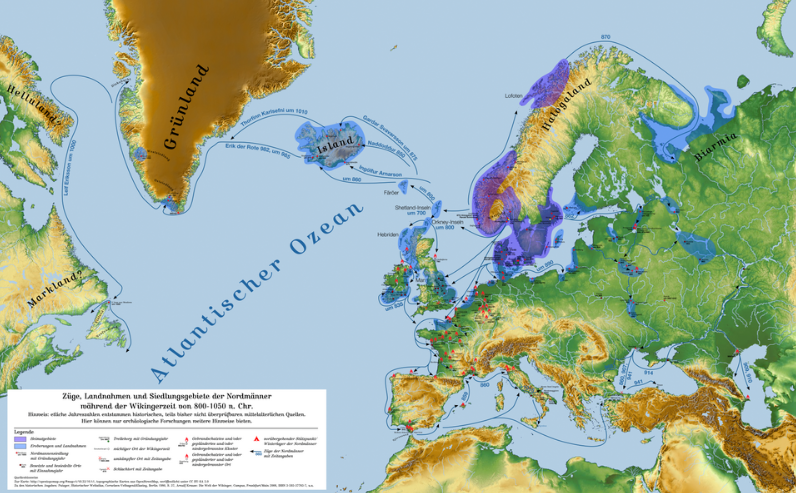
Vikings were a seafaring people originally from Scandinavia (present-day Denmark, Norway, and Sweden),[3][4][5][6] who from the late 8th to the late 11th centuries, raided, pirated, traded, and settled throughout parts of Europe.[7][8][9]
They voyaged as far as the Mediterranean, North Africa, the Middle East, Greenland, and Vinland (present-day Newfoundland in Canada, North America). In their countries of origin, and in some of the countries they raided and settled, this period of activity is popularly known as the Viking Age, and the term "Viking" also commonly includes the inhabitants of the Scandinavian homelands as a whole during the late 8th to the mid-11th centuries.
The Vikings had a profound impact on the early medieval history of northern and Eastern Europe, including the political and social development of England (and the English language)[10] and parts of France, and the establishment of Kievan Rus', the ancestor of the later states of Belarus, Russia, and Ukraine.[11][12]
Expert sailors and navigators of their characteristic longships, Vikings established Norse settlements and governments in the British Isles, the Faroe Islands, Iceland, Greenland, Normandy, and the Baltic coast, as well as along the Dnieper and Volga trade routes across Eastern Europe, where they were also known as Varangians.
They were the first Europeans to reach North America, briefly settling in Newfoundland (Vinland). While spreading Norse culture to foreign lands, they simultaneously brought home slaves, concubines, and foreign cultural influences to Scandinavia, influencing the genetic[16] and historical development of both. During the Viking Age, the Norse homelands were gradually consolidated from smaller kingdoms into three larger kingdoms: Denmark, Norway, and Sweden.
The Vikings spoke Old Norse and made inscriptions in runes. For most of the Viking Age, they followed the Old Norse religion, but became Christians over the 8th–12th centuries. The Vikings had their own laws, art, and architecture. Most Vikings were also farmers, fishermen, craftsmen, and traders. Popular conceptions of the Vikings often strongly differ from the complex, advanced civilisation of the Norsemen that emerges from archaeology and historical sources.
Extracted from: [https://en.wikipedia.org/wiki/Vikings]
🧠 Memory Mnemonic
The Vikings – Top 6 Facts Memory Mnemonic – Viking MOTEF
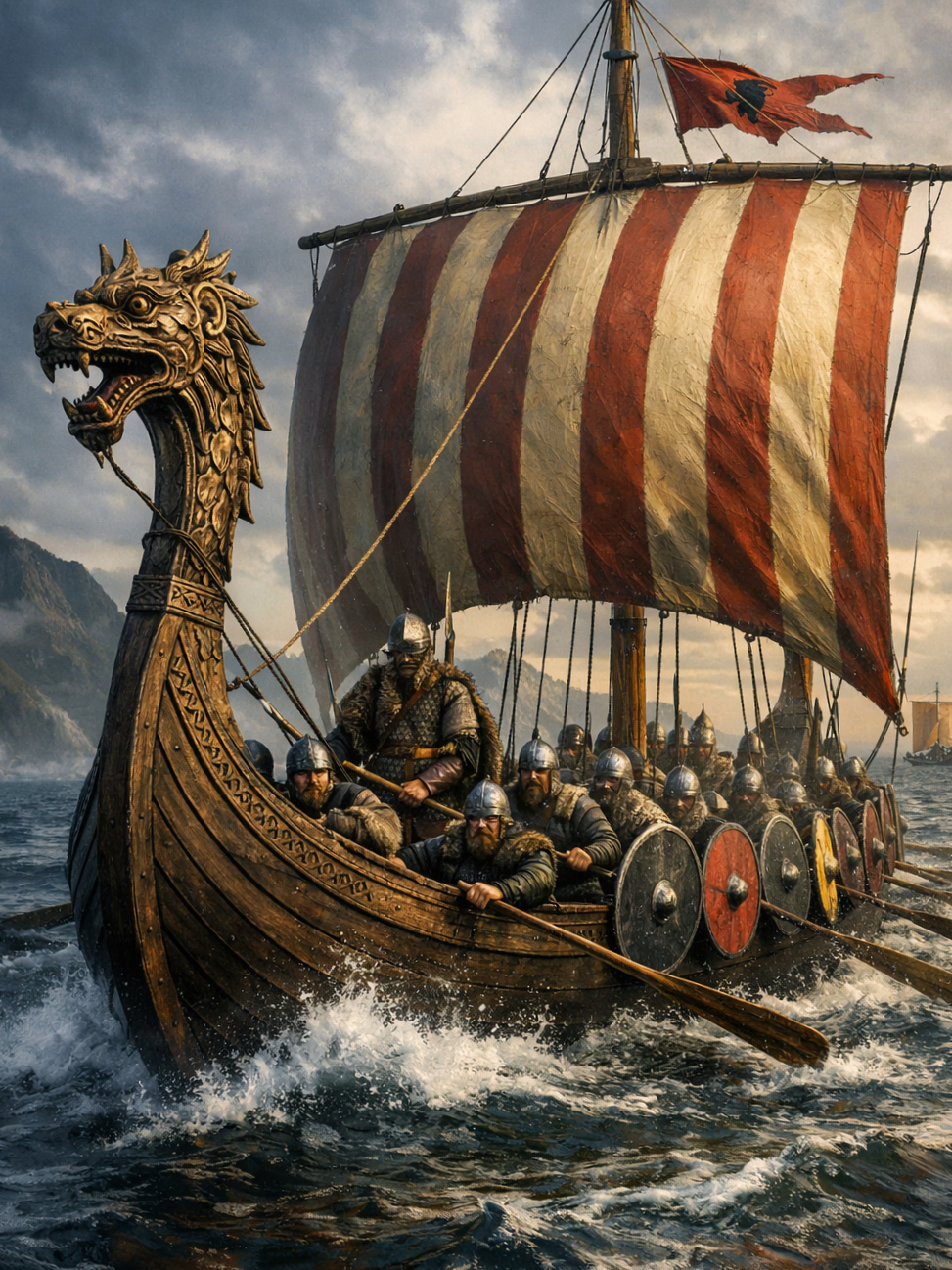
(Picture the dragon-headed longships that became a recurring motif in Viking culture.)
1. "Viking" means to go on a pirate raid
2. Most Vikings were farmers, fishermen, and traders
3. Originally from Scandinavia
4. They were skilled seafarers and shipbuilders
5. Existed during the Viking Age from approximately 800 to 1050 AD
6. First Europeans to reach North America
🔎 Five Fun Facts
1. As stated in the mnemonic, “Viking” means a pirate raid in the Old Norse language. It is not an ethnicity or race. Rather, they were Norse, originating from Scandinavia. Viking society was divided into three distinct social classes, which were:
• Jarls – The aristocracy
• Karls – Free peasants
• Thralls – The enslaved
2. The Vikings were the kings of the seas as a result of their shipbuilding expertise and extraordinary navigation skills. Their ship's versatility allowed them to sail down rivers and along the open ocean. They built ships optimised for war and others to manage cargo. While their navigation skills were a mix of mental maps, latitude sailing, environmental observation, primitive sun compasses, celestial navigation, and natural aids such as the migration of birds and the habitat of whales.
3. This navigation skill helped the Vikings reach North America nearly 500 years before Christopher Columbus. The well-known Viking Leif Erikson led this expedition and is believed to have reached the continent around 1000 AD. Proof of this landing came from a Norwegian archaeologist who discovered a Viking base, which was then confirmed by carbon dating and tree-ring analysis.
4. The Vikings had their own mythology and Gods. This mythology can be found throughout modern-day culture, from the days of the week to superhero films. Those days of the week are Tuesday for Tyr, the god of war and justice, Wednesday after Odin, the god of wisdom and war, Thursday named after Thor, the god of thunder, and Friday named after Frigg, the goddess of marriage and fertility.
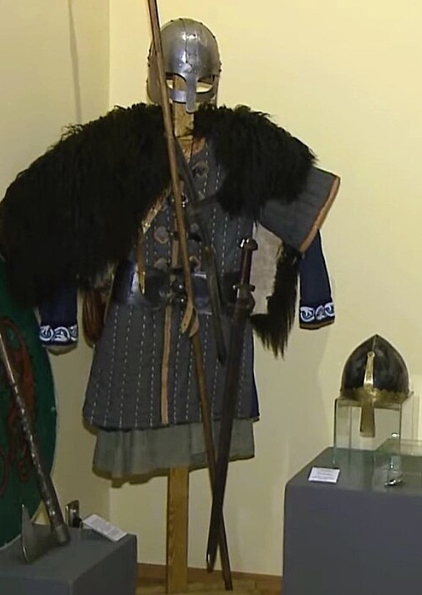
5. Our iconic images of Vikings wearing horned helmets may unfortunately not be true. They actually wore a more functional iron cap, which was often called spangenhelm, that was designed to protect the skull in combat. The myth of the horned helmets was popularised by costume designer Carl Emil Doepler in the 1870s for a Richard Wagner opera.


🎓 Three-Question Quiz
Q.1. What were the famous Viking ships called?
Q.2. Which three Scandinavian countries did Vikings come from?
Q.3. Which Viking explorer is believed to have reached North America before Columbus?
Bonus Q. Which Norse god was associated with thunder?
Bonus Q. What writing system did Vikings use? Options are Runes, Maya, or Cuneiform
Bonus Q. How did the Vikings communicate?
🧠 Memory Mnemonic Recap
The Vikings – Top 6 Facts Memory Mnemonic – Viking MOTEF
(Picture the dragon-headed longships that became a recurring motif in Viking culture.)
1. "Viking" means to go on a pirate raid
2. Most Vikings were farmers, fishermen, and traders
3. Originally from Scandinavia
4. They were skilled seafarers and shipbuilders
5. Existed during the Viking Age from approximately 800 to 1050 AD
6. First Europeans to reach North America
🎓 Three-Question Quiz Answers
Q.1. What were the famous Viking ships called?
A. Longships
Q.2. Which three Scandinavian countries did Vikings come from?
A. Norway, Denmark, and Sweden
Q.3. Which Viking explorer is believed to have reached North America before Columbus?
A. Leif Erikson
Bonus Q. Which Norse god was associated with thunder?
A. Thor
Bonus Q. What writing system did Vikings use? Options are Runes, Maya, or Cuneiform
A. Runes
Bonus Q. How did the Vikings communicate?
A. They used Norse Code!
🔤 Word of the Week
mercurial
[mer-kyoor-ee-uhl
ADJECTIVE
1. changeable; volatile; fickle; flighty; erratic.
Example
The Vikings were known for their mercurial nature, shifting quickly from fierce raiders to skilled traders and explorers.
Extracted from: [https://www.dictionary.com/]
💡 Memory Tip
For our memory tip today, we will be talking about fatty fish and that includes fish like salmon, trout, mackerel, tuna, and sardines, amongst others.
These fatty fish are highly beneficial to the brain as they contain abundant amounts of omega-3 fatty acids, particularly DHA and EPA. These healthy fats have various benefits some of which include maintenance of brain cells, improved communication between neurons, and support memory and concentration, and thus learning.
Regular consumption has also been linked to a lower risk of cognitive decline and depression. While the vitamins contained, which include vitamin D, iodine, selenium, and protein, all support a healthy nervous system. Just one tip, the smaller fish are preferable as they contain less of the heavy metals than larger fish, such as shark, swordfish, and tuna. See you next week.
👉 Free Memory Mnemonics at:
https://www.themnemonictreepodcast.com
🎧 Listen on Apple Podcasts:
https://podcasts.apple.com/au/podcast/the-mnemonic-tree-podcast/id1591795132
🎧 Listen on Spotify:
https://open.spotify.com/show/3T0LdIJ9PBQMXM3cdKd42Q?si=fqmaN2TNS8qqc7jOEVa-Cw
🔗 References
https://chatgpt.com/c/6a1a5818-fbf4-83ec-b148-658c157bcae5
MERCURIAL Definition & Meaning | Dictionary.com
https://chatgpt.com/c/6a1d6745-4f34-83ec-aad4-f445c25e0dcb
https://www.natgeokids.com/au/discover/history/general-history/10-facts-about-the-vikings/
https://www.historyhit.com/facts-about-the-vikings/
https://chatgpt.com/c/6a215c7d-6174-83ec-9d7b-de097e8520be
https://www.natgeokids.com/au/discover/history/general-history/10-facts-about-the-vikings/