
🌳 Ep. 230: The Hindenburg Disaster – Top 5 Facts Memory Mnemonic
👋 Intro
Hello and welcome to this episode of the podcast, "The Mnemonic Memory," where we add a single mnemonic leaf to our Tree of Knowledge.
I’m Jans, your Mnemonic Man, and today's episode will be on the Hindenburg disaster, one of the first disasters to be captured on film and made even more famous by the dramatic live radio commentary of reporter Herbert Morrison.
The LZ 129 Hindenburg was a rigid, dirigible airship, which means any airship that is powered and steerable.
Its demise occurred on May 6, 1937, when the airship approached its mooring mast during stormy weather conditions.
The construction of the Hindenburg was completed in March 1936. It had amassed a total of 62 flights prior to the disaster, some of which included trips to the United States, Brazil, and throughout Europe.
On its fateful journey, it was travelling from Germany to New Jersey in the United States. The flight was delayed due to strong headwinds over the Atlantic. Once it reached New Jersey, it was delayed again by the captain, who circled the area to wait for thunderstorms and poor weather to clear.
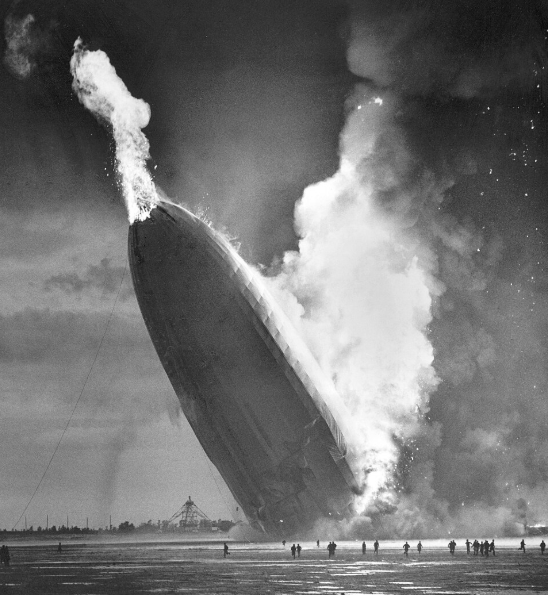
While attempting to dock at the Naval Air Station in Lakehurst, the Hindenburg caught fire at the rear of the airship. The fire quickly engulfed the airship and sent the Hindenburg crashing to the ground.
There were 97 people in total on the Hindenburg, of whom 62 survived the incident. Thirty-six were tragically killed, which included one member of the ground crew.
The tragedy is believed to have been caused by a spark of static electricity igniting leaking hydrogen. This remains debated, but what is not debated is the fact that the Hindenburg disaster destroyed public confidence in this mode of transport and led to the collapse of the airship industry.
Today’s mnemonic will be on the top five facts about the Hindenburg disaster.
So, with that being said, we will begin with a summary from Wikipedia.
📖 Wikipedia Summary
The Hindenburg disaster was an airship accident that occurred on May 6, 1937, in Manchester Township, New Jersey, United States. The LZ 129 Hindenburg (Luftschiff Zeppelin #129; Registration: D-LZ 129) was a German commercial passenger-carrying rigid airship, the lead ship of the Hindenburg class, the longest class of flying machine, and the largest airship by envelope volume.[1]
Filled with hydrogen, it caught fire and was destroyed during its attempt to dock with its mooring mast at Naval Air Station Lakehurst. The accident caused 35 fatalities (13 passengers and 22 crewmen) among the 97 people on board (36 passengers and 61 crewmen), and an additional fatality on the ground.
The disaster was the subject of newsreel coverage, photographs, and Herbert Morrison's recorded radio eyewitness reports from the landing field, which were broadcast the next day.[2] A variety of theories have been put forward for both the cause of ignition and the initial fuel for the ensuing fire.
The publicity shattered public confidence in the giant passenger-carrying rigid airship and marked the abrupt end of the airship era.[3]
Extracted from: [https://en.wikipedia.org/wiki/Hindenburg_disaster]
🧠 Memory Mnemonic
The Hindenburg Disaster – Top 5 Facts Memory Mnemonic – FONTT
(Picture the Hindenburg flying over New York, and you can clearly see the scarlet Gothic-style font used to write “Hindenburg” on each side of the airship.)
1. Flight was from Frankfurt, Germany, to Lakehurst, New Jersey
2. Occurred on May 6, 1937
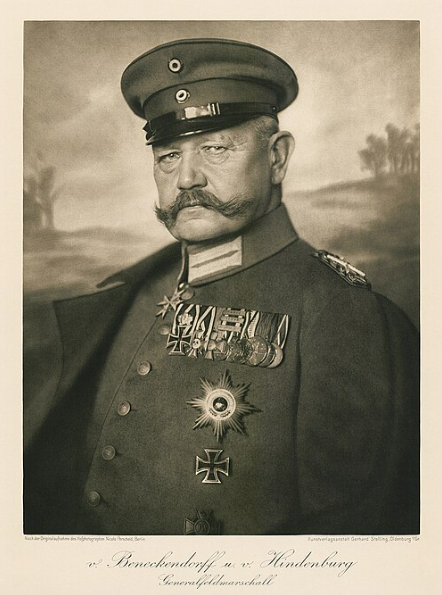
3. Named after former German president Paul von Hindenburg
4. Thirty-six passengers and sixty-one crew
5. Thirty-six people died in the accident
🔎 Five Fun Facts
1. Ironically, the Hindenburg was built using metal from an airship that had crashed itself. The airship was Britain’s R-101, which had crashed in October 1930. The Luftschiffbau Zeppelin Company purchased Duralumin from the wreckage and used the material to make parts for the Hindenburg.
2. The Hindenburg was named after Paul von Hindenburg, who was a distinguished general who became Germany’s second president. From here, there are two links to the Nazi’s. Firstly, he appointed Adolf Hitler as Chancellor in 1933 before he died in 1934, and secondly, the Nazi Party partially funded the construction of the Hindenburg, when money was tight following the depression.
3. The Hindenburg airship was supposed to be helium not hydrogen. The helium is non-flammable and hence safer; however, it was unavailable as America had cornered the helium market, as well as having laws declaring that no helium gas be exported from the United States without presidential approval as well as other cabinet officials. So, their hand was forced, and dire consequences followed.
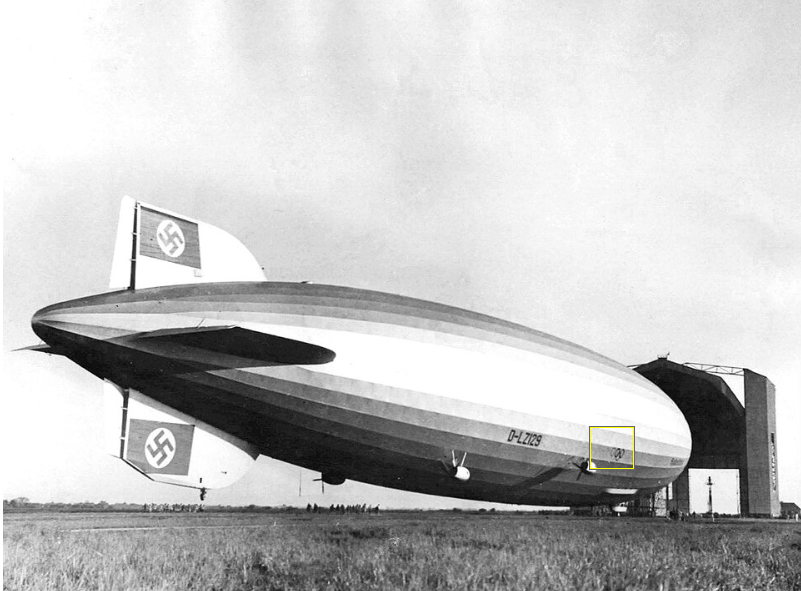
4. The Hindenburg was used as a symbol of strength, power, and cutting-edge technology when it was used by Hitler during the opening ceremony of the 1936 Berlin Olympic Games. The massive airship flew over the stadium for around an hour at an altitude of around 750 feet, with the five Olympic rings painted on its hull, swastikas on the tail fins, and also flying an Olympic flag.
5. The Hindenburg was the largest flying machine ever constructed. It came in at a length of 245 metres and 41.2 metres in diameter at its widest point. To put this in perspective, it was longer than three Boeing 747 jets, or just 24 metres shy of the length of the Titanic. Along with its size came luxury with dining rooms, lounges, sleeping cabins, and, believe it or not, even a smoking room!
6. Now, to how the Hindenburg caught on fire. Though there is still much debate as to what started the fire, the leading theory suggests that leaking hydrogen gas was ignited by a spark caused by static electricity during stormy weather conditions in Manchester. Some theories suggest sabotage, as did the 1975 Hindenburg movie; however, no conclusive evidence was ever found.
Now, just before we move on to the quiz, I was going to tell a joke about the Hindenburg, a joke which I have told before, but because of the response it got previously, I won’t … … it just didn’t land well!

_von_Nicola_Perscheid.jpg)

🎓 Three-Question Quiz
Q.1. In what year did the Hindenburg disaster occur?
Q.2. What type of aircraft was the Hindenburg?
Q.3. In which U.S. state did the Hindenburg crash, and what was the name of the Naval Air Station?
Bonus Q. What famous phrase did radio reporter Herbert Morrison shout during the disaster?
Bonus Q. Approximately how long did it take for the Hindenburg to be destroyed by fire? Options are 30 to 40 seconds, just under three minutes, or just over five minutes.
🧠 Memory Mnemonic Recap
The Hindenburg Disaster – Top 5 Facts Memory Mnemonic – FONTT
(Picture the Hindenburg flying over New York, and you can clearly see the scarlet Gothic-style font used to write “Hindenburg” on each side of the airship.)
1. Flight was from Frankfurt, Germany, to Lakehurst, New Jersey
2. Occurred on May 6, 1937
3. Named after former German president Paul von Hindenburg
4. Thirty-six passengers and sixty-one crew
5. Thirty-six people died in the accident
🎓 Three-Question Quiz Answers
Q.1. In what year did the Hindenburg disaster occur?
A. 1937
Q.2. What type of aircraft was the Hindenburg?
A. A rigid, dirigible airship, also known as a zeppelin
Q.3. In which U.S. state did the Hindenburg crash, and what was the name of the Naval Air Station?
A. New Jersey at Lakehurst
Bonus Q. What famous phrase did radio reporter Herbert Morrison shout during the disaster?
A. “Oh, the humanity!”
Bonus Q. Approximately how long did it take for the Hindenburg to be destroyed by fire? Options are 30 to 40 seconds, just under three minutes, or just over five minutes.
A. 30 to 40 seconds, mainly due to the hydrogen, the chimney effect, and the coating on the airship’s exterior
🔤 Word of the Week
verbum sap
[vur-buhm sap]
1. A word to the wise is sufficient; no more need be said.
Example
Verbum sap; the Hindenburg disaster showed the danger of relying on highly flammable hydrogen in passenger airships.
Extracted from: [https://www.dictionary.com/]
💡 Memory Tip
For our memory tip today, we will be talking about a food that looks like a brain (something they refer to as the Doctrine of Signatures, which means like cures like), and that is the walnut.
Now I love walnuts, and we actually had a walnut tree down the farm where I grew up that is over 100 years old. It seems everyone around the area knew of this walnut tree, and come harvest time, you had to be quicker than Usain Bolt to grab a nut.
Walnuts contain many nutrients linked to cognitive health, some of which include omega-3 fatty acids, particularly alpha-linolenic acid (ALA), vitamin E, polyphenols, magnesium, copper, and melatonin.
These nutrients can help reduce inflammation, protect against oxidative stress, and thus support healthy brain function. This is backed up by many studies suggesting that eating walnuts may improve memory, concentration, and processing speed.
So, eat your nutty brains for long-term cognitive health. See you next week.
👉 Free Memory Mnemonics at:
https://www.themnemonictreepodcast.com
🎧 Listen on Apple Podcasts:
https://podcasts.apple.com/au/podcast/the-mnemonic-tree-podcast/id1591795132
🎧 Listen on Spotify:
https://open.spotify.com/show/3T0LdIJ9PBQMXM3cdKd42Q?si=fqmaN2TNS8qqc7jOEVa-Cw
🔗 References
https://chatgpt.com/c/6a0baec8-0334-83ec-b795-56099ed5f985
VERBUM SAP Definition & Meaning |Dictionary.com
https://www.mentalfloss.com/history/hindenburg-disaster-facts
https://upjoke.com/hindenburg-jokes
https://www.airships.net/hindenburg/disaster/
https://www.diy.org/article/lz_129_hindenburg