🌳 Ep. 240: The Rhine River – 6 Countries It Flows Through Memory Mnemonic
👋 Intro
Hello and welcome to this episode of the podcast, "The Mnemonic Memory", where we add a single mnemonic leaf to our Tree of Knowledge.
I’m Jans, your Mnemonic Man, and today's episode will be on the “river of fate of the Germans” and “the most German of all rivers,” the Rhine.
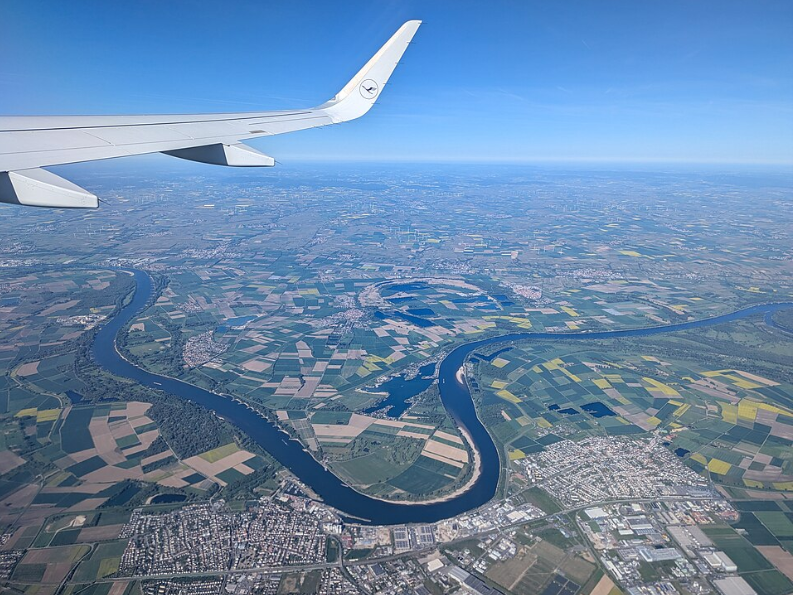
The Rhine is one of the most significant rivers in Europe. It begins in the Swiss Alps and flows approximately 1,230 kilometres all the way to the North Sea through the Netherlands.
It travels through or along the borders of six countries, which include Switzerland, Liechtenstein, Austria, Germany, France, and the Netherlands. It has played a key role in trade, transportation, and cultural development.
It has formed the border between the Roman Empire and Germanic tribes, has been crossed by Julius Caesar’s Campaigns, was brought under French control by the Napoleonic Wars, and finally was a major geographical line of defence by Nazi Germany in World War II.
As a result of its vast history, the Rhine is littered with UNESCO World Heritage sites, particularly in Germany, which is renowned for its steep vineyards, medieval castles, charming villages, and the legendary Lorelei rock, which is associated with a beautiful siren in German folklore.
The Rhine also supports international shipping through the port of Rotterdam, which is essential to Europe’s economy. The river has faced challenges including pollution and habitat loss; however, international cooperation has helped turn this around to make this trip through the heart of Europe stunning, memorable, and timeless.
Today’s mnemonic will be on the six countries the Rhine flows through in order.
So, with that being said, we will begin with a summary from Wikipedia.
📖 Wikipedia Summary
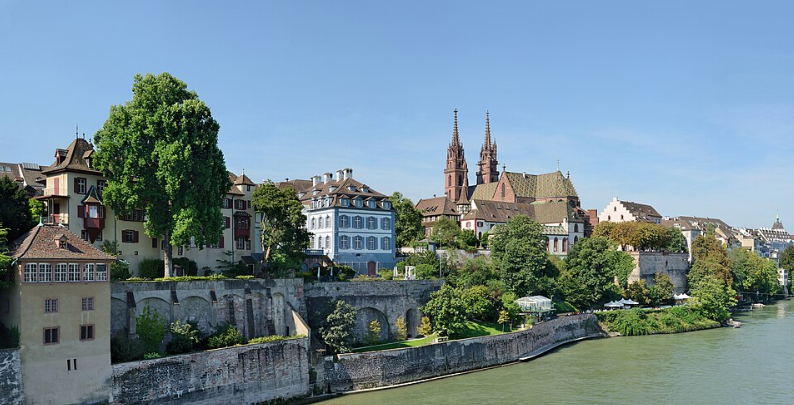
The Rhine (/raɪn/ RYNE)[3][note 2] is one of the major rivers of Europe. The river begins in the Swiss canton of Graubünden in the southeastern Swiss Alps. It forms part of the Swiss–Liechtenstein border, then part of the Swiss–Austrian border.
From Lake Constance downstream, it forms part of the Swiss–German border. After that, the Rhine defines much of the Franco-German border. It then flows in a mostly northerly direction through the German Rhineland. Finally, the Rhine turns to flow predominantly west to enter the Netherlands, eventually emptying into the North Sea.
Draining an area of 185,000 km2, it is the second-longest river in Central and Western Europe (after the Danube), at about 1,230 km (760 mi)[note 1] with an average discharge of about 2,900 m3/s (100,000 cu ft/s).
It also contains the most powerful waterfall in Europe, the Rhine Falls. The International Commission for the Hydrology of the Rhine Basin (CHR) and EUWID contend that the river could experience a massive decrease in volume, or even dry up completely in case of drought, within the next 30 to 80 years, as a result of the climate crisis.[6][7]
The Rhine and the Danube comprised much of the Roman Empire's northern inland boundary, and the Rhine has been a vital navigable waterway bringing trade and goods deep inland since those days. The various castles and defences built along it attest to its prominence as a waterway in the Holy Roman Empire.
As of 2026, the river fleet consists of 6,900 vessels with an accumulated total weight capacity of 10 million tonnes. Among the largest and most important cities on the Rhine are Cologne, Rotterdam, Düsseldorf, Duisburg, Strasbourg, Mannheim, Ludwigshafen, Arnhem, and Basel.
Its name derives from the Gaulish Rēnos. There are two German states named after the river, North Rhine-Westphalia and Rhineland-Palatinate, in addition to several districts.
Extracted from: [https://en.wikipedia.org/wiki/Rhine]
🧠 Memory Mnemonic
The Rhine River – 6 Countries it flows through Memory Mnemonic – SLAG FaN
(Picture yourself on a cruise down the Rhine and you are on the open deck in the heat of the day, listening to the tour guide whilst fanning yourself with your slag fan.)
1. Switzerland
2. Liechtenstein
3. Austria
4. Germany
5. France
6. Netherlands
NB: A slag fan most commonly refers to a clack fan branded with bold designs or phrases, such as the Total Slag or Slag fan models popular in queer nightlife.
🔎 Five Fun Facts
1. The Rhine River is about 1,230 kilometres long and ranks as the second-longest river in Central and Western Europe behind the Danube. Along this length, it contains several UNESCO World Heritage Sites, some of which include:
· The Upper Middle Rhine Valley in Germany
· Cologne Cathedral in Germany
· Speyer Cathedral also in Germany
· Strasbourg, Grande-Île, and Neustadt in France
· And the Lower Germanic Limes from Germany to the Netherlands, among others
2. The name of the Rhine River comes from the ancient Celtic word Rēnos, which means “large, flowing water” or “raging flow.” The river might be known as the Rhine in English, but it appears to be polyonymous, being known as the Rhein in Germany and Switzerland, Rhin in France, and Rijn in the Netherlands.
3. The Rhine in Germany is famous for two things, and those are medieval castles and vineyards. As the Rhine was a busy trade route, castles, which are essentially fortresses, are scattered along the river, many elevated on hills, which enabled protection of the trade route and allowed local rulers to collect tolls. The vineyards are predominantly Riesling (around 76%), known for their dry and sweet styles.
4. One of the Rhine’s most famous landmarks was inspired by the legend of a beautiful siren. This landmark is Lorelei, which is a steep rock near Sankt Goarshausen in Germany. The siren’s enchanting singing would apparently distract sailors and cause their boats to crash on the rocks. Poet Heinrich Heine wrote about this in his poem “Die Loreley”, in 1824.
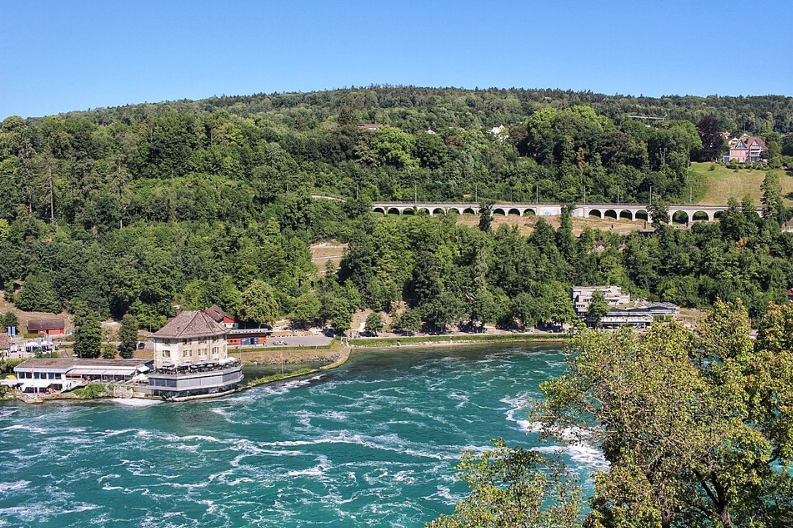
5. The Rhine is the home to Europe’s largest waterfall by volume. Its name is the Rhine Falls, and it is located in the Swiss town of Schaffhausen. The falls are approximately 150 metres wide and 23 metres high, with up to 600,000 litres of water plunging over the falls during peak flow.


🎓 Three-Question Quiz
Q.1. Approximately how long is the Rhine River? Options are 1,230 kilometres or 1,630 kilometres
Q.2. Into which sea does the Rhine River eventually flow?
Q.3. Which major European port, one of the world's busiest, is connected to the Rhine River?
Bonus Q. What is the name of the largest waterfall in Europe by volume of water on average, and what country is it in?
Bonus Q. Why does France have so many rivers?
🧠 Memory Mnemonic Recap
The Rhine River – 6 Countries it flows through Memory Mnemonic – SLAG FaN
(Picture yourself on a cruise down the Rhine and you are on the open deck in the heat of the day, listening to the tour guide whilst fanning yourself with your slag fan.)
1. Switzerland
2. Liechtenstein
3. Austria
4. Germany
5. France
6. Netherlands
NB: A slag fan most commonly refers to a clack fan branded with bold designs or phrases, such as the Total Slag or Slag fan models popular in queer nightlife.
🎓 Three-Question Quiz Answers
Q.1. Approximately how long is the Rhine River? Options are 1,230 kilometres or 1,630 kilometres
A. 1,230 kilometres
Q.2. Into which sea does the Rhine River eventually flow?
A. The North Sea
Q.3. Which major European port, one of the world's busiest, is connected to the Rhine River?
A. The Port of Rotterdam in the Netherlands.
Bonus Q. What is the name of the largest waterfall in Europe by volume of water on average, and what country is it in?
A. The Rhine Falls in Switzerland
Bonus Q. Why does France have so many rivers?
A. Because water always follows the path of least resistance!
🔤 Word of the Week
Caprice
[kuh-prees]
a sudden, unpredictable change, as of one's mind or the weather.
Example
The caprice of the Rhine River creates ever-changing currents and scenery.
Extracted from: [https://www.dictionary.com/]
💡 Memory Tip
For our memory tip today, we will be talking about the benefits of whole grains for a healthy brain. Whole grains include foods such as oats, brown rice, wholemeal bread, and quinoa. They contain complex carbohydrates that release glucose slowly, supplying the brain with a steady source of energy.
They are also rich in B vitamins, including folate and vitamin B6, which help the functioning of the brain and nervous system. Other benefits include fibre, which supports gut health and thus the gut-brain connection, minerals, and antioxidants.
So, stick with choosing whole grains over refined grains and remember “no pain, no grain” … I don’t think that works! See you next week.
👉 Free Memory Mnemonics at:
🎧 Listen on Apple Podcasts:
https://podcasts.apple.com/au/podcast/the-mnemonic-memory-podcast/id1591795132
🎧 Listen on Spotify:
https://open.spotify.com/show/3T0LdIJ9PBQMXM3cdKd42Q
🔗 References
https://upjoke.com/river-jokes
https://www.trafalgar.com/real-word/rhine-river-facts/
https://www.tauck.com.au/river-cruises/european-river-facts/rhine-river-facts