👋 Intro
Hello and welcome to this episode of the podcast, "The Mnemonic Memory", where we add a single mnemonic leaf to our Tree of Knowledge.
I’m Jans, your Mnemonic Man, and today's episode will be on one of the most recognisable landmarks in Australia, the Sydney Opera House.
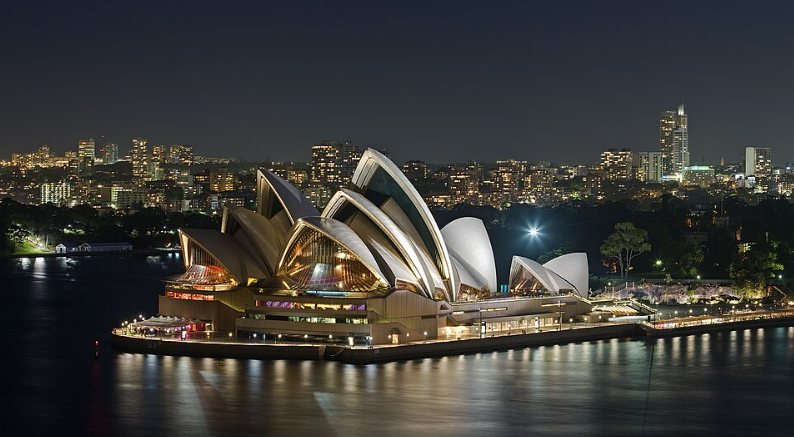
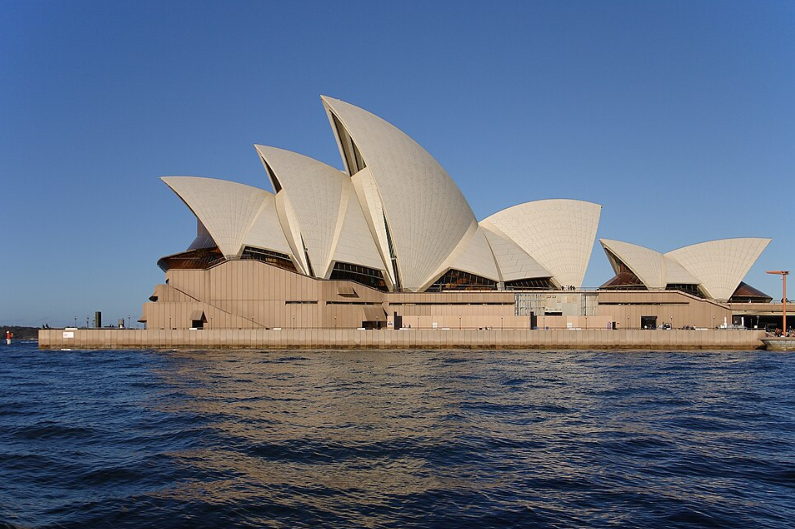
Located on Bennelong Point in Sydney Harbour, the Opera House is meant to depict billowing white sails catching the wind on Sydney Harbour. Its architect, Jørn Utzon, also drew inspiration from a wide variety of natural forms, which included bird wings, clouds, seashells, walnuts, palm leaves, and deer at a forest edge.
Demand grew for a dedicated venue for major musical and theatrical performances in the 1940s. As a result, an international design competition was launched in 1956. Out of 233 entries, Jørn Utzon was announced the winner in 1957 for his organic and natural approach.
Construction began in 1959, but Utzon’s revolutionary design concept presented engineering challenges for which at the time there were no solutions. These solutions did come, but only after four years of testing a variety of methods. This raised issues over costs and design decisions with the New South Wales government, with the end result being Utzon resigning from the project in 1966.
This left Australian architect Peter Hall to finish the project with a team of architects, which he did by 20th October 1973, the same day it was officially opened.
Today, the Opera House is a major performing arts centre, hosting thousands of events annually, including opera, concerts, theatre productions, dance performances and contemporary music. It attracts millions of visitors each year, and was listed as a UNESCO World Heritage site on June 28, 2007.
Today’s mnemonic will be on the top six facts about the Sydney Opera House.
So, with that being said, we will begin with a summary from Wikipedia.
📖 Wikipedia Summary
The Sydney Opera House is a multi-venue performing arts centre in Sydney, New South Wales, Australia. Located on the foreshore of Sydney Harbour, it is widely regarded as one of the world's most famous and distinctive buildings, and a masterpiece of 20th-century architecture.[3][4]
Designed by Danish architect Jørn Utzon and completed by an Australian architectural team headed by Peter Hall, the building was formally opened by Queen Elizabeth II on 20 October 1973,[5] 16 years after Utzon's 1957 selection as winner of an international design competition.
The Government of New South Wales, led by the premier, Joseph Cahill, authorised work to begin in 1958 with Utzon directing construction. The government's decision to build Utzon's design is often overshadowed by circumstances that followed, including cost and scheduling overruns as well as the architect's ultimate resignation.[6]
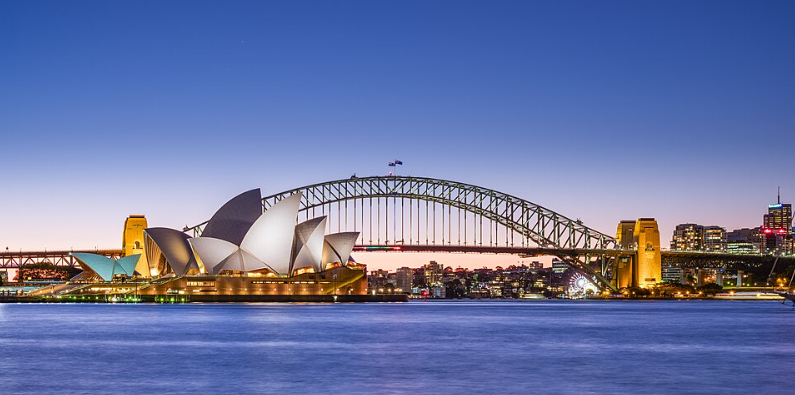
The building and its surrounds occupy the whole of Bennelong Point on Sydney Harbour, between Sydney Cove and Farm Cove, adjacent to the Sydney central business district and the Royal Botanic Garden, and near to the Sydney Harbour Bridge.
The building comprises multiple performance venues, which together host over 1,800 performances annually, attended by more than 1.4 million people.[7] Performances are presented by numerous performing artists, with many resident companies such as Opera Australia, the Sydney Theatre Company and the Sydney Symphony Orchestra.
As one of the most popular visitor attractions in Australia, the site is visited by more than ten million people annually,[7] and approximately 350,000 visitors take a guided tour of the building each year.[8] The building is managed by the Sydney Opera House Trust, an agency of the New South Wales State Government.
In 2007, the Sydney Opera House became a UNESCO World Heritage Site,[9] having been listed on the (now defunct) Register of the National Estate since 1980, the National Trust of Australia register since 1983, the City of Sydney Heritage Inventory since 2000, the New South Wales State Heritage Register since 2003, and the Australian National Heritage List since 2005.[10][11]
The Opera House was also a finalist in the New 7 Wonders of the World campaign list.[12][13]
Extracted from: [https://en.wikipedia.org/wiki/Sydney_Opera_House]
🧠 Memory Mnemonic
The Sydney Opera House – Top 6 Facts Memory Mnemonic – CLOUD Roof
(Picture the roof of the Sydney Opera House appearing like a cloud floating over the ocean, as it was actually stated by architect Jørn Utzon.)
1. Construction cost of $102 million
2. Located in Sydney, Australia
3. Opened in 1973
4. UNESCO World Heritage site
5. Designed by Danish Architect Jørn Utzon
6. Roof covered in over one million glossy Swedish ceramic tiles
🔎 Five Fun Facts
1. As mentioned in the mnemonic, Jørn Utzon was the architect of the Sydney Opera House. He won the honour in an international design competition, where he beat out 232 other entries from around the world. He was a relative unknown from Denmark who had only built a few minor projects. Initially, his submission was thrown into the rejection pile as the local judging panel found his conceptual drawings too abstract and lacking mathematical definition. Miraculously, his entry was revived when a late-arriving judge sifting through the rejections saw his and declared it a work of “genius” and ended up convincing the other three judges.
2. The Sydney Opera House started its life as the proverbial “White Elephant.” Construction began in 1959 and was originally expected to take just four years. Instead, it took 14 years to complete, finally opening in 1973. To add to this, the original budget was $7 million, and this blew out by just over $95 million to make the final cost $102 million.
3. This takes us back to the architect Jørn Utzon. He famously resigned from the project in 1966 following disagreements with the New South Wales government over costs, design, construction, and also the enormous public backlash. He left Australia and was never to return to see the project completed, declining his invitation to the official opening in 1973. Eventually, time healed all and they reconciled, and Utzon was hired back as a consultant in 1999.
4. The roof of the Sydney Opera House is covered with more than one million ceramic tiles that were manufactured in Sweden. These tiles are arranged in a chevron pattern and are two distinct colours: a glossy white and a matte cream, so the sails would catch the changing light of Sydney Harbour, but not create a blinding glare.
5. The Sydney Opera House houses the largest mechanical tracker-action pipe organ in the world. It contains 10,154 pipes and took around ten years to design and build. It is approximately 15 to 16 metres high, 13 metres wide, 8 metres deep, and weighs approximately 37.5 tonnes. It is located in the Concert Hall and was designed and built by Australian organ builder Ronald Sharp.


🎓 Three-Question Quiz
Q.1. Which country is Jørn Utzon from?
Q.2. How many years did it take to build the Sydney Opera House?
Q.3. In which year was the Sydney Opera House declared a UNESCO World Heritage Site? Options are 1997, 2007, or 2017
Bonus Q. Who officially opened the Sydney Opera House in 1973?
Bonus Q. Why do pirates listen to opera music?
🧠 Memory Mnemonic Recap
The Sydney Opera House – Top 6 Facts Memory Mnemonic – CLOUD Roof
(Picture the roof of the Sydney Opera House appearing like a cloud floating over the ocean, as it was actually stated by architect Jørn Utzon.)
1. Construction cost of $102 million
2. Located in Sydney, Australia
3. Opened in 1973
4. UNESCO World Heritage site
5. Designed by Danish Architect Jørn Utzon
6. Roof covered in over one million glossy Swedish ceramic tiles
🎓 Three-Question Quiz Answers
Q.1. Which country is Jørn Utzon from?
A. Denmark
Q.2. How many years did it take to build the Sydney Opera House?
A. 14 years, up from the original 4 years projected
Q.3. In which year was the Sydney Opera House declared a UNESCO World Heritage Site? Options are 1997, 2007, or 2017
A. 2007
Bonus Q. Who officially opened the Sydney Opera House in 1973?
A. Queen Elizabeth II
Bonus Q. Why do pirates listen to opera music?
A. Because they love the high Cs!
🔤 Word of the Week
trouvaille
[troo-vahy, troo-vay]
noun
French. A lucky discovery or a found treasure.
Example
The Sydney Opera House is an architectural trouvaille that captivates visitors from around the world.
Extracted from: [https://www.dictionary.com/]
💡 Memory Tip
For our memory tip today, which will be our last regarding food, we will be talking about the benefits of pumpkin and sunflower seeds for a healthy brain.
Both pumpkin and sunflower seeds provide protein and unsaturated fats, as well as being rich in antioxidants.
More specifically, pumpkin seeds are rich in magnesium, zinc, and iron, which help support nerve function and communication between neurons. Whereas sunflower seeds are an excellent source of vitamin E and also contain B vitamins, healthy fats, and selenium, which all help support brain function.
These seeds are easy to incorporate into a balanced diet by mixing them with salads, in yogurt, in porridge, a scroggin mix, or simply eating by themselves. See you next week.
👉 Free Memory Mnemonics at:
🎧 Listen on Apple Podcasts:
https://podcasts.apple.com/au/podcast/the-mnemonic-memory-podcast/id1591795132
🎧 Listen on Spotify:
https://open.spotify.com/show/3T0LdIJ9PBQMXM3cdKd42Q
🔗 References
https://chatgpt.com/c/6ad9db41-1688-83ec-b6b1-6dbd793087ba
https://world.new7wonders.com/app/uploads/sites/2/2006/11/fun-facts.pdf?
TROUVAILLE Definition & Meaning | Dictionary.com
https://upjoke.com/opera-jokes
https://www.sydneyoperahouse.com/building/interesting-facts-about-sydney-opera-house