👋 Intro
Hello and welcome to this episode of the podcast, "The Mnemonic Memory", where we add a single mnemonic leaf to our Tree of Knowledge.
I’m Jans, your Mnemonic Man, and today's episode will be on the author of one of my favourite childhood books, which was The Lion, the Witch and the Wardrobe, and that author is C.S. Lewis.
Born in Northern Ireland in 1898, C.S. Lewis grew up with his older brother Warren and parents who encouraged reading and imagination. The house was full of books, and Lewis was able to read on his own by the age of three, and by the age of five he was writing stories.
His mother died when he was nine years old, after which he was sent to strict boarding schools in England much to his dislike. As a teenager, he became fascinated by Norse mythology, nature, and European epics, which sparked his interest in writing stories.
He served in the British Army as a second lieutenant, where, along with trench fever, he was wounded badly when a shell exploded, lodging shrapnel in his chest, left wrist, and leg. On his return, he resumed studies and eventually became a respected professor at both Oxford and Cambridge.
Lewis was raised a Christian, and his faith, which wavered in his teenage years, became a major influence on his writings. Lewis wrote more than 30 books, covering fiction, philosophy, religion, and literary criticism.
His most famous work is The Lion, the Witch and the Wardrobe, which is the first book in a series of seven fantasy novels under the banner of The Chronicles of Narnia. His friendship with J.R.R. Tolkien was both productive and significant. Lewis’s strong moral principles and altruistic nature were also evident in a lifelong pact he made with a fellow cadet, Edward “Paddy” Moore. They promised to look after each other’s families should either of them be killed in battle. Tragically, Paddy was killed, and Lewis honoured his promise by caring for Paddy’s mother, Janie Moore, for more than three decades, until her death in 1951.
Lewis also donated the vast majority of his book royalties through a charitable trust to those in need.
Today’s mnemonic will be on the top five books of C.S. Lewis.
So, with that being said, we will begin with a summary from Wikipedia.
📖 Wikipedia Summary
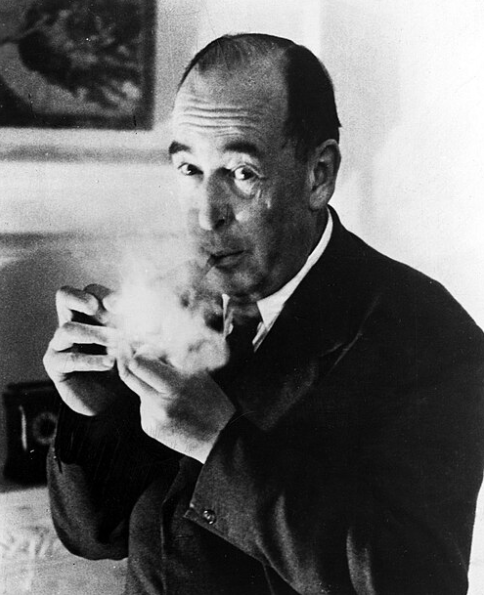
Clive Staples Lewis (29 November 1898 – 22 November 1963) was a British author, literary scholar and Anglican lay theologian. He held academic positions in English literature at both Magdalen College, Oxford (1925–1954), and Magdalene College, Cambridge (1954–1963).
He is best known as the author of The Chronicles of Narnia, but he is also noted for his other works of fiction, such as The Screwtape Letters and The Space Trilogy, and for his non-fiction Christian apologetics, including Mere Christianity, Miracles and The Problem of Pain.
Lewis was a close friend of J. R. R. Tolkien, the author of The Lord of the Rings. Both men served on the English faculty at the University of Oxford and were active in the informal Oxford literary group known as the Inklings.
According to Lewis's 1955 memoir Surprised by Joy, he was baptized in the Church of Ireland but lost his faith and became an atheist during adolescence. Lewis returned to Anglicanism at the age of 32, owing to the influence of Tolkien and other friends, and he became an "ordinary layman of the Church of England".[1] Lewis's faith profoundly affected his work, and his wartime radio broadcasts on the subject of Christianity brought him wide acclaim.
Lewis wrote more than 30 books which have been translated into over 30 languages and have sold millions of copies. The seven books that make up The Chronicles of Narnia have sold the most and have been popularized on stage, television, radio and cinema. His philosophical writings are widely cited by Christian scholars from many denominations.
In 1956 Lewis married the American writer Joy Davidman; she died of cancer four years later at the age of 45. Lewis died on 22 November 1963 of kidney failure, at age 64. In 2013, on the 50th anniversary of his death, Lewis was honoured with a memorial in Poets' Corner in Westminster Abbey.
Extracted from: [https://en.wikipedia.org/wiki/C._S._Lewis]

🧠 Memory Mnemonic
C. S. Lewis – Top 5 Books Memory Mnemonic – GLAS Mirror
(Picture a glass mirror inside the wardrobe that is the gateway to a fantasy world.)
1. The Great Divorce
2. The Lion, the Witch and the Wardrobe
3. A Grief Observed
4. The Screwtape Letters
5. Mere Christianity
🔎 Five Fun Facts
1. Clive Staples Lewis was born on 29 November 1898 in Belfast, Northern Ireland. His childhood home contained thousands of books, which helped develop his imagination, which ran wild, inventing imaginary animal characters and his own fantasy worlds. He moved to England for schooling and would later attend the University of Oxford, where he would eventually spend much of his career teaching, along with Cambridge.
2. C.S. Lewis and J.R.R. Tolkien, author of The Hobbit and The Lord of the Rings, met at Oxford University. They initially clashed but soon discovered a shared passion for Norse mythology. Both were also members of a literary group at Oxford University called the Inklings, and both helped and encouraged each other with their writings for decades.
3. C.S. Lewis wrote The Chronicles of Narnia, which was a series of seven fantasy books published between 1950 and 1956. Lewis’s creation of Narnia came organically through blending childhood memories, real-world places, and diverse mythologies. The most famous, The Lion, the Witch and the Wardrobe, tells the story of four children who discover a magical world through a wardrobe, which has sold over 100 million copies.
4. C.S. Lewis was brought up as a Christian; however, he became an atheist during his teenage years. Following many years of self-questioning and discussion with peers, he returned to Christianity and ended up becoming one of the most influential Christian writers of the 20th century. One of the main characters in the Chronicles of Narnia is Aslan the lion, who is a direct reflection of Jesus Christ, though Lewis rejected the idea that the books were simple allegories.
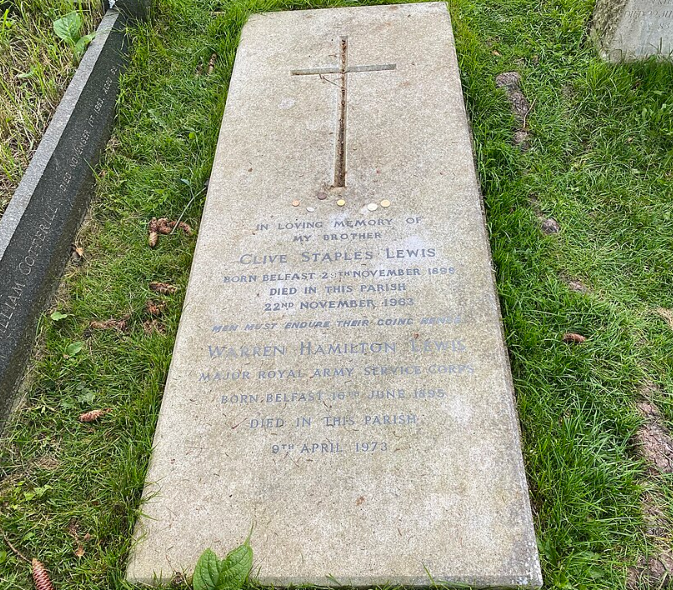
5. C.S. Lewis died on 22 November 1963, at age 64. Now this date may sound familiar to many, as it is the same date that American President John F. Kennedy was assassinated in Dallas, Texas. But it also happens to be the same date that English author Aldous Huxley died. This coincidence later inspired books and essays, such as Peter Kreeft’s Between Heaven and Hell.


🎓 Three-Question Quiz
Q.1. What is the name of the magical land created by C.S. Lewis in his famous fantasy series?
Q.2. How many books make up The Chronicles of Narnia series?
Q.3. What was the name of the literary discussion group that Lewis and Tolkien belonged to at Oxford?
Bonus Q. In which city was C.S. Lewis born?
Bonus Q. What is a lion and a witch doing in your wardrobe?
🧠 Memory Mnemonic Recap
C.S. Lewis – Top 5 Books Memory Mnemonic – GLAS Mirror
(Picture a glass mirror inside the wardrobe that is the gateway to a fantasy world.)
1. The Great Divorce
2. The Lion, the Witch and the Wardrobe
3. A Grief Observed
4. The Screwtape Letters
5. Mere Christianity
🎓 Three-Question Quiz Answers
Q.1. What is the name of the magical land created by C.S. Lewis in his famous fantasy series?
A. Narnia
Q.2. How many books make up The Chronicles of Narnia series?
A. Seven
Q.3. What was the name of the literary discussion group that Lewis and Tolkien belonged to at Oxford?
A. The Inklings
Bonus Q. In which city was C.S. Lewis born?
A. Belfast, Northern Ireland
Bonus Q. What is a lion and a witch doing in your wardrobe?
A. Apparently, it’s Narnia your business!
🔤 Word of the Week
attenuate
[uh-ten-yoo-ayt]
to weaken or reduce in force, intensity, effect, quantity, or value.
Example
C.S. Lewis’s faith helped attenuate his grief and suffering during life’s darkest moments.
Extracted from: [https://www.dictionary.com/]
💡 Memory Tip
For our memory tip today, we will be getting into our next category of brain-enhancing products, and that will be on herbal and plant-based compounds, and the first one we will be talking about is Bacopa monnieri.
Often called Brahmi, Bacopa monnieri is a traditional medicinal herb used in Ayurvedic medicine for centuries. Best known for its potential benefits to improve memory, learning, and concentration, bacopa also has neuroprotective properties.
Some clinical studies suggest Bacopa may improve memory recall and information processing, although benefits can take up to 8–12 weeks. It has benefits but also has a downside with side effects including nausea, stomach cramps, and diarrhoea. So, take it with healthy fats, at the same time each day, and be consistent for results. See you next week.
👉 Free Memory Mnemonics at:
https://www.themnemonictreepodcast.com
🎧 Listen on Apple Podcasts:
https://podcasts.apple.com/au/podcast/the-mnemonic-tree-podcast/id1591795132
🎧 Listen on Spotify:
https://open.spotify.com/show/3T0LdIJ9PBQMXM3cdKd42Q?si=fqmaN2TNS8qqc7jOEVa-Cw
🔗 References
https://chatgpt.com/c/6aed10f6-88c4-83ec-b197-15e891012f3f
https://obu.edu/stories/blog/2019/10/10-facts-about-c-s-lewis.php
https://www.cslewisinstitute.org/c-s-lewis-life-works/
https://kids.kiddle.co/C._S._Lewis